 Young boys, hey, what do you do with them? Back in the day, you just left them to it for fear of some sort of embarrassing encounter with a box of tissues. These days, however, as the ITV drama Adolescence so skilfully exposed, you daren’t leave them to their own devises – digital or otherwise.
And, as parents, carers, teachers and the authorities try desperately to work out quite how to tackle this generation’s inner demons which seem to be driving a rise in misogyny, their behaviour is often going unchecked in the anonymous online world, where they can hide behind a screen.

Still, maybe, just maybe advertising can help. Well, that is the thinking of the Scottish Government, at least, which is launching a new campaign created by Leith that is designed to connect with boys aged 11-18 at the exact moment harmful content appears in their feeds.
Built through a collaboration with young people, the work is aimed at delivering a simple, powerful behavioural ask: “Sexist content hurts girls in real life – including the ones you know. Don’t engage with it.”
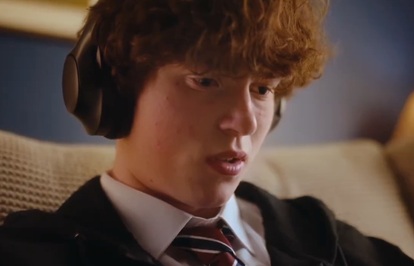
It is fronted by a film that is rooted in a scenario young people instantly recognise. A boy is scrolling at home when a misogynistic video pops up. As he’s about to react, the emojis on his screen transform into the face of a sad girl – clearly the same girl who is sitting beside him on the sofa. It’s a sharp, visual jolt that makes the impact personal without preaching or lecturing. The film ends with the line: “Sexist content hurts girls IRL. You can help stop it. Don’t ♥ it.”
To get under the skin of the issue, Leith partnered with planning and research company The Nursery and pupils from a Leith Secondary School to run a research and co‑creation process, involving boys and girls at every stage, from early insight to creative thought‑starters to testing.
Their feedback shaped the tone, the language and the scenarios, with the aim of ensuring the campaign felt authentic and grounded in their lived experience. The young people said they didn’t want to be told what to think, but they did want to know what they could safely do to help.
The strategy behind the work is simple: boys don’t always seek out misogynistic content, but once they interact with it, even accidentally, their feeds can shift quickly.
With almost all young people online daily and the vast majority owning their own phones, the scroll is where attitudes are being shaped.
Boys aged 13-14 spend on average three and a half hours online each day, and research shows algorithms can move them from relatively benign content to extreme misogynistic viewpoints in a matter of minutes.
Meanwhile, three in four girls aged 11-16 say they have seen or experienced sexism – a reality that shaped the urgency and direction of the creative idea. The work is designed to give boys a face‑saving way to push back: don’t like it, don’t share it, don’t engage with it.

Alongside the film for young people, supporting films, audio and out‑of‑home executions speak directly to adults – parents and carers – who play a crucial role in shaping how young people navigate what they see online.
The adult‑facing work highlights how quickly boys encounter misogynistic content and encourages open conversations, directing them to the website ParentClub.scot for practical guidance.
The campaign runs across digital, social, radio and out‑of‑home channels from today to mid‑March.
Leith deputy client partner Richard Thomson said: “This work was built with young people, not just for them. They helped shape the tone, the scenarios and the message, delivering something that was drawn directly from their worlds. They wanted to take action, but in a safe and achievable way that would make a difference.
“Getting this messaging right has been a challenge, but one we’ve been delighted to overcome by working side‑by‑side with the young people this campaign is for.”
So, what is the consensus around the Decision Marketing office?
Well, to be fair, this is a major issue that should concern us all, and it is good to see that this campaign actually got young people involved in devising the strategic and creative direction of the film rather than simply talking down at them.
Of course, behavioural change does not happen overnight but if this activity makes some teenage boys actually sit up and take note, that is a start. And, at this stage, we cannot expect much more…
Decision Marketing Adometer: A ‘highly engaging’ 10 out of 10