
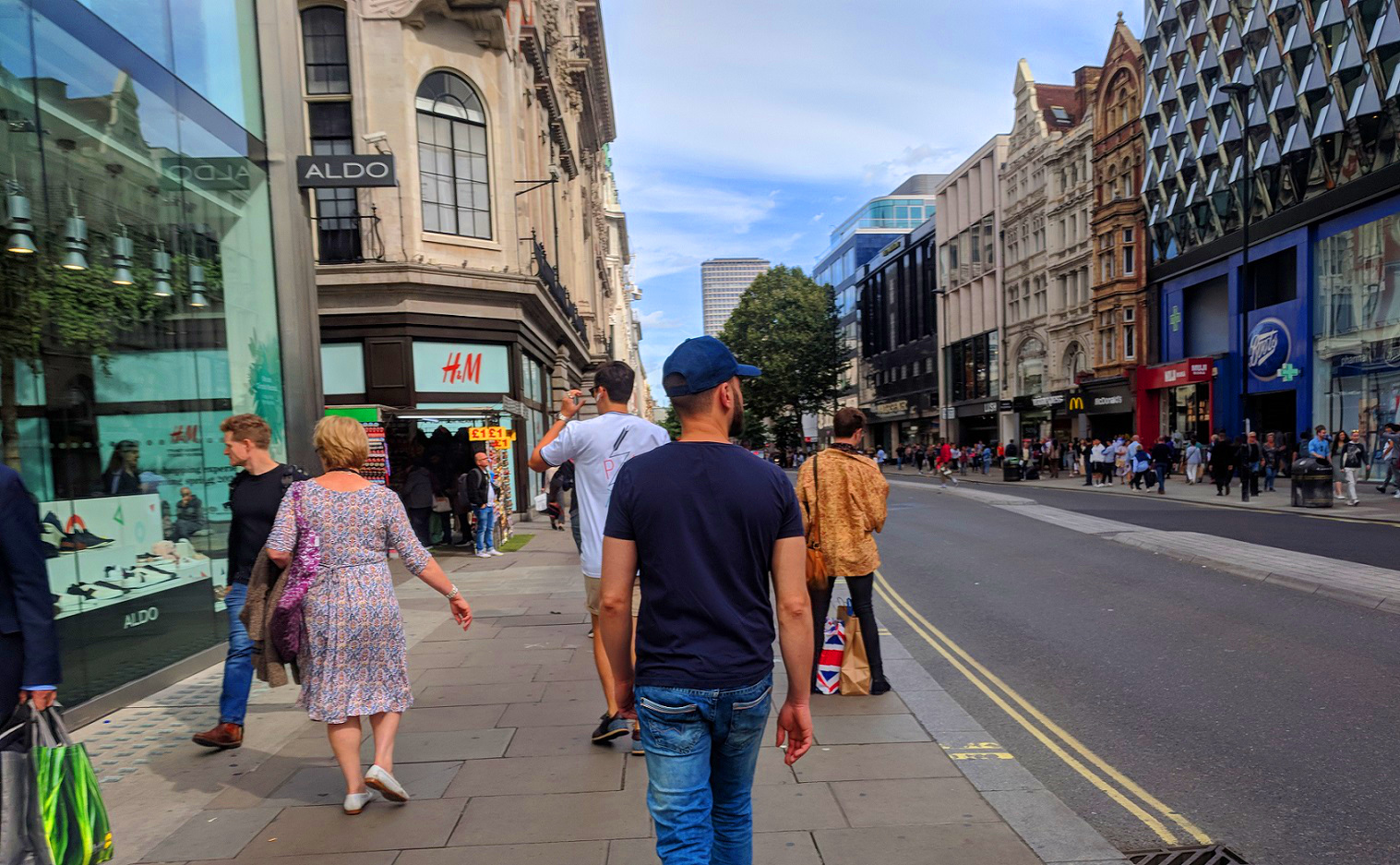
 Remember the days when you could pop into BHS, then Debenhams, before having a nose round Topshop, Topman, Miss Selfridge, Dorothy Perkins and Burton, then cross the road to Woolworths, Threshers and Somerfield and finally dive into Virgin Megastores?
Does that seem like a lifetime ago? Well, in fact that was the shape of the British high street in just 2010, when Decision Marketing launched. Fast forward 15 years and the retail landscape is virtually unrecognisable.

While the Internet became available to the public in the early 1990s, with pioneers like Amazon (initially selling books) and eBay launching in the mid-1990s, online shopping was mostly a novelty, accounting for just 1% of total UK retail in 2000.
By 2005, more than half of the UK population bought at least one Christmas present online, indicating widespread consumer acceptance. However, online shopping’s real growth spurt came between 2006 and 2020 when it soared from from 3% of total sales to 19%.
The Covid-19 pandemic also dealt a brutal blow to the UK’s traditional high street, accelerating the shift to digital and pushing online retail to historic highs – reaching 37% of all retail sales in early 2021.
However, rather than marking the high street’s demise, the crisis acted as a swift, harsh catalyst for its evolution. Today, the British high street is not just recovering; it is redefining its value, returning as a key factor in the new, integrated landscape of omnichannel retail.
This new era is defined by the seamless blending of the digital and physical worlds, ensuring the customer’s “journey” is fluid no matter where they choose to shop. The most valuable consumer – the omnichannel shopper – spends significantly more than single-channel buyers. The high street’s role has radically shifted from a simple point of sale to a multifaceted strategic asset, encompassing fulfilment, experience, and brand engagement.
And, omnichannel retail is fundamentally driven by omnichannel marketing, which seeks to create a consistent, personalised, and continuous conversation with the customer across every touchpoint.
At the heart of this is personalisation and customer-centricity. It has long been recognised that the pandemic accelerated the use of first-party customer data; marketers now have the potential to move away from generic messages towards hyper-personalised communications.
For instance, a customer who browses a specific coat online might receive a targeted email informing them the coat is available for try-on or same-day click and collect at their nearest high street store. However, there is a fine line between personalisation and creepy marketing; one that many brands and their agencies have yet to tread.
Meanwhile, social media and paid search ads are now bein used to promote store events, styling consultations, or the convenience of click and collect, potentially driving foot traffic to the high street.
There has also been a rise in in-store signage, the use of QR codes, app downloads, and loyalty programmes, with ethical cosmetics retailer Lush recently opening its first ever loyalty scheme, despite admitting that customers have been asking for a rewards programme for decades.
Not that Lush is alone in being slightly late to market; New Look only launched its first programme earlier this year, while JD Sports, Ryman and Robert Dyas are also only recent converts to the joys of loyalty marketing.

And by getting customers to browse their full extended range online, retailers are attempting to ensure that the physical visit converts into long-term digital engagement and data capture.
Then there is the exponential growth of retail media, from shopper marketing tactics typified by instore leaflets and promotions to a discipline which this year is forecast to be worth $150bn globally and account for more than 20% of all digital advertising spend.
The retailers which have benefited the most are those with the existing scale and foresight to invest in sophisticated supply chains and tech infrastructure pre-or early-pandemic.
For the likes of Tesco and Sainsbury’s, the pandemic normalised online grocery shopping and they have capitalised on their dense, local store networks, turning thousands of branches into micro-fulfilment centres that support both home delivery and store-based collection, ensuring they capture the surge in online food sales.
Next has been another winner. A long-time leader in UK multichannel retail, Next has tapped into its strong logistics foundation and vast catalogue, the Next Directory. By integrating a successful online marketplace (‘Next Label’) with its extensive network of physical stores for efficient collection and returns, it has created a resilient, high-margin model that attracts both its own brand consumers and third-party shoppers.
Even M&S has transformed its physical estate to be more food-focused, while simultaneously modernising its Clothing & Home supply chain. Strategic investment in its website and app has positioned its stores as key click and collect points, catering to consumers who want the convenience of online shopping with the reliability of an in-person pick-up.
Having suffered a devastating cyberattack in April this year, the retailer has shown resilience and confidence in its long-term strategy. M&S recently admitted the hack cost it £324m in lost sales – slightly more than its £300m earlier estimate – but it was able to recover £100m in its first half through an insurance payout. Most retailers would have been forced to go under.
In fact, competitors like Next said it benefited from the attack but strong food sales suggest M&S has managed to keep customers. It recently recorded three years of consecutive monthly food volume growth, and, while the group’s adjusted profit before tax was down by half, it still came in at £184m.
Overall, the new era of shopping is an acknowledgment that physical presence remains a powerful tool for customer acquisition, brand loyalty, and cost-effective fulfilment.
By integrating strong digital capabilities with a compelling physical experience, the successful players are charting a course for a connected retail future where the high street is not merely surviving, but thriving at the heart of a burgeoning omnichannel economy.
Related stories
Decision Marketing at 15: Who’s the boss of the DMAs?
Decision Marketing at 15: In tribute to industry legends
Decision Marketing at 15: Puppy or vicious watchdog?
Decision Marketing at 15: The march of the robot army
Decision Marketing at 15: The ‘Big Bang’ for retail media
Decision Marketing at 15: Why data now rules the world
Decision Marketing at 15: Direct mail the great survivor
Decision Marketing at 15: How data sparked a revolution

Be the first to comment on "Decision Marketing at 15: The rise of omnichannel retail"