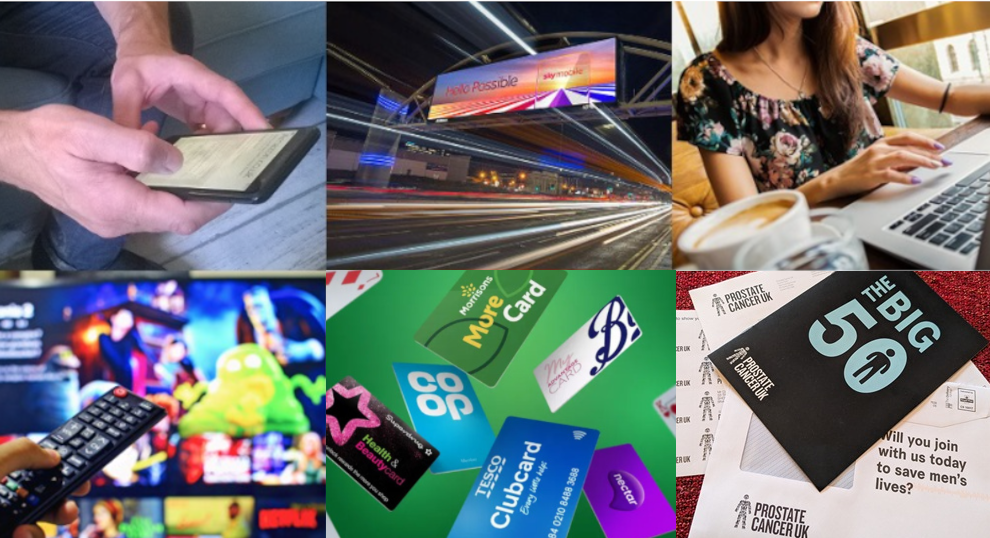
 It is fair to say that the advertising and marketing industry has experienced more fundamental change over the past 15 years than the previous 50. Of course, back in 2010, digital had grown into a major channel, but these days it seems to dominate everything.
In 2010, the estimated global digital advertising spend was around $65bn, accounting for roughly 15% of total global adspend; this year it is estimated that it could reach $750bn, accounting for over 65% of the total market – and rising.

To mark Decision Marketing’s 15th birthday, we will be publishing a series of articles in the coming days and weeks on how this has shaped the industry and triggered both the growth of individual disciplines and forced others to adapt.
We will show how, moving from a relatively stable, media-dominated landscape in the late 2000s the current complex, data-driven ecosystem has emerged. And, to kick off the series, here are what we believe to be 15 of the biggest trends that have shaped this transformative era.
The mobile revolution
Fewer developments have had a bigger impact on the business than the launch and mass adoption of smartphones, which has permanently moved marketing from the desktop to the palm of the hand. The mobile phone has become the primary screen, forcing marketers to adopt a “mobile-first” design philosophy. This shift has in turn driven innovation in location-based advertising, optimised user experiences, and accelerated the decline of desktop-focused strategies.
The dominance of Google and Meta
The rise of the “duopoly” (Google and Meta) as the primary gatekeepers of digital attention is perhaps the single most significant power shift in media history. Their sophisticated targeting capabilities, massive user bases, and robust self-service ad platforms have enabled them to capture the lion’s share of global adspend, consolidating power and effectively creating the modern performance marketing playbook.
The birth of influencer marketing
Consumers’ growing scepticism of traditional ads has led to the emergence of “everyday” content creators who, despite some issues with the advertising watchdog, have managed cultivate trust and authenticity with niche audiences. Influencer marketing has evolved from an organic tactic into a multi-billion-dollar industry, fundamentally changing how brands reach younger demographics by leveraging peer recommendations over polished endorsements.
The programmatic revolution
The automation of advertising buying through programmatic platforms has transformed media purchasing. Algorithms began trading ad impressions in real-time, allowing for hyper-targeted, efficient campaigns based on vast consumer data sets. This shift has brought a new level of precision and accountability to advertising that was previously unimaginable, although fears over how brands are handling customer data have yet to be fully addressed.
The advent of Generative AI
The public launch of generative AI tools in the early 2020s has marked a new technological dawn. While the exact scale of the roll-out is still not known, and moving from pilot to full-scale adoption is still proving tricky, AI has made major inroads into the industry. From assisting in copywriting and image generation to data analysis and predictive modelling, the technology promises a future where marketing efficiency and personalisation reach new heights, while also raising questions about the role of human creativity.
The rise of content marketing
As consumers have become adept at blocking or skipping interruptive ads, many brands have embraced “content marketing” – with the aim of creating valuable, engaging, and non-promotional content (articles, videos, guides) to attract and retain audiences. This discipline has focused on building relationships rather than merely pushing products, although with the rise of AI, there are increasing concerns over so-called AI slop.
The growth of social media
Beyond the duopoly, the rapid ascent of visually driven platforms like Instagram and the explosive global growth of TikTok has created ever-evolving battlegrounds for brand engagement. Each platform has introduced unique ad formats, creative challenges, and opportunities for viral success, forcing marketers to adapt their creative strategies constantly.
The move to brand purpose and authenticity
Driven by social unrest and environmental crises, consumers began demanding more from the companies they buy from, fuelling the mainstream shift toward “purpose-driven marketing,” where brands like Patagonia and Ben & Jerry’s started to integrated social and environmental activism into their core identities. Many consumers began craving genuine connections with brands that reflected their values. Campaigns like Dove’s “Real Beauty” and Always’ “#LikeAGirl” resonated strongly by focusing on social issues and emotional storytelling, moving away from simple product promotion. Even so, driven by the Trump administration, some brands are now reining in their activities.

The retail media explosion
Retail media is rapidly emerging as a dominant force in digital advertising, driven by retailers leveraging their vast first-party shopper data to offer highly targeted ad placements. This shift allows brands to connect directly with consumers at the point of purchase, moving beyond traditional platforms like Google and Meta. What was once derided as “shopper marketing” is forecast to have a global value of nearly $200bn by 2026, surpassing combined linear and connected TV adspend. In the UK, all the major retailers – including Amazon, Tesco, Boots, Sainsbury’s, Asda and John Lewis Partnership – are vying for a slice of the action.
The privacy backlash and regulatory scrutiny
High-profile data breaches and consumer privacy concerns have triggered significant regulatory changes. The implementation of the GDPR in Europe and similar legislation worldwide has aimed to signal the end of a “wild west” era of data collection, forcing marketers to prioritise user consent, transparency, and a shift toward first-party data strategies. Regulators, including the UK Information Commissioner’s Office, have been forced to step up, with varying degrees of success.
The decline of the third-party cookie
In response to these privacy concerns, major tech players (led by Google and Apple) have begun phasing out the third-party cookie and implementing stricter tracking limitations (such as Apple’s ATT framework). This move is forcing the industry to reinvent the mechanics of targeting and measurement, signalling one of the biggest current challenges in advertising technology.
The rise of connected TV and streaming
As audiences ditched traditional TV, advertising spend has followed them to streaming platforms like Netflix, Amazon Prime, Apple TV and Disney. Connected TV has the potential to offer the engaging, full-screen impact of TV combined with the precise targeting and measurement of digital advertising, creating a powerful new channel.
Omnichannel marketing becomes essential
The fragmentation of media channels has meant consumers are now interacting with brands across websites, physical stores, social media, and apps simultaneously. Marketers have had to develop complex omnichannel strategies to create seamless, consistent experiences across all touchpoints, moving away from siloed channel management.
Video content dominates all formats
From short-form TikToks and YouTube Shorts to long-form cinematic ads, video has become the undisputed king of engagement, especially for younger consumers. This shift has been driven by better bandwidth and mobile consumption habits, pushing brands to become competent video production houses to capture fleeting attention spans.
Data, the one ring to rule them all
And, finally, nearly all of these trends have been triggered by the data-driven marketing revolution. It is without doubt that data has fundamentally reshaped the marketing and advertising industry, moving from assumption-based practices to evidence-based sciences.
By tapping into extensive customer data, brands have gained deep insights into consumer behaviour, preferences, and needs, giving companies the opportunity to launch highly targeted campaigns and hyper-personalised activity at scale, ensuring the right message reaches the right audience at the optimal time. The continuous analysis of data enables real-time performance tracking and optimisation, boosting return on investment and maximising budget efficiency.
And, it seems, there is more to come. With the rise of AI and first-party data strategies, marketers now have the ability to use predictive analytics to forecast trends and anticipate customer needs, gaining a significant competitive edge and building stronger, more relevant customer relationships. Well, that is the idea…
Related stories
Decision Marketing at 10: Future of media effectiveness
Decision Marketing at 10: Quantum leap to the next 10
Decision Marketing at 10: Big winners for the next 10
Decision Marketing at 10: The next 10 for ecommerce
Decision Marketing at 10: The next 10 for ‘king data’
Decision Marketing at 10: The song remains the same
Decision Marketing at 10: How GDPR changed the world
Decision Marketing at 10: Who’s the poor relation now?