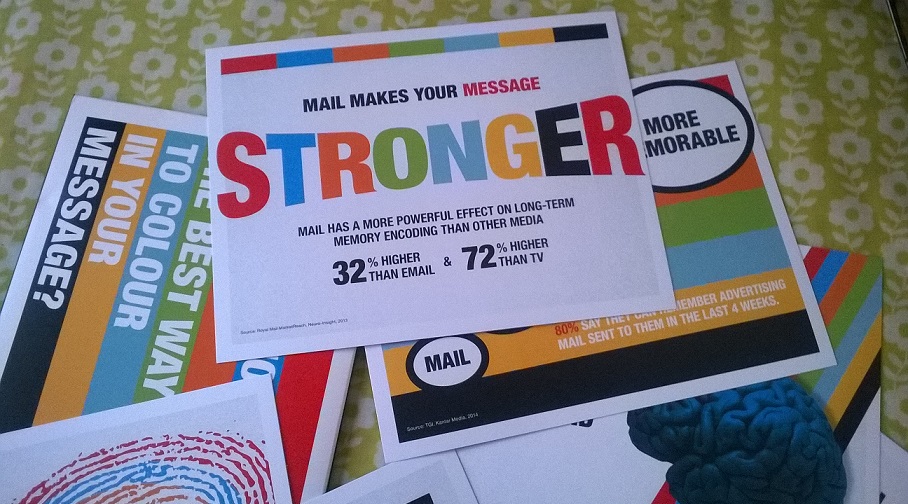
 Back in 2010, many were predicting that the humble mailshot would soon be “swimming with the fishes”, with digital’s promise of real-time targeting, hyper-personalisation and instant response condemning direct mail to a slow and painful death.
However, 15 years later and not only is the medium still holding its own, it is witnessing a profound renaissance by evolving from the Capital One and MBNA strategy of “mailing bombardment” to a highly targeted, tactile, and invaluable component of the modern marketing mix.

Where once consumers and the media would bemoan the “junk mail mountain”, these days their ire has shifted to the tech giants and their data privacy failings.
This revival has been made possible in no small part to the work of Royal Mail MarketReach, under the leadership of former Claydon Heeley, RMG and Aimia (Carlson Marketing) chief Jonathan Harman, who joined in 2012.
At the time of his appointment Harman said: “Mail is a great medium, which has simply not been promoted enough. We need to change perceptions and ensure clients know how vital advertising mail can be to their marketing plans. Mail is a proven and powerful tool for advertisers wanting to build customer relationships and I look forward to making this case strongly.”
Over the following six and a half years, Harman was instrumental in launching a host of initiatives designed to ensure direct mail could hold its own against the digital onslaught.
One of his first tasks was to commission an 18-month indepth research project resulting in the Private Life of Mail study, which provided insight into the role of mail in people’s homes and the impact this has on advertisers’ ROI. This was backed by the Mailmen marketing campaign, featuring senior clients and agency chiefs, a version of which is still running today fronted by Mark Ritson, among others.
Harman also forged stronger links with the DMA, the IDM, the Advertising Association, and even D&AD to get advertising creatives on board.
MarketReach also launched price incentives for first-time mail users, programmatic mail, the MailToolkit, and “Partially Addressed Mail”, a GDPR-compliant, standard addressed direct mail product with new customer targeting options.
The 2018 launch of the Jicmail scheme – an ABC-style audience measurement programme – has also been a major factor in direct mail’s revival. Backed by Royal Mail, Whistl, the DMA, IPA and ISBA, the launch followed the creation of the Joint Industry Committee (JIC), and has filled a major gap in the measurement of direct mail.
Its quarterly reports chart how consumers are interacting with mail, and which brands are investing the most. In fact, its most recent report, released in September, revealed that the frequency of interaction with mailshots – combined with the effectiveness of the medium at driving key digital actions among consumers – has reached a five-year high and is closing in on the record set during the lockdown of Q2 2020, when brands had an entirely captive audience.
But arguably the most radical change has been the demise of the blanket mailing strategy. In the pre-2010 era, direct mail often meant sending millions of identical pieces, relying on volume for a minimal return. Today, this has been entirely reversed due to advancements in data analytics and variable data printing.
And marketers now tap into the same rich, behavioural, and transactional data used for digital campaigns to inform their mailings.
This has allowed campaigns to be hyper-targeted to specific, high-value customer segments – even individual households – rather than general demographics. This shift in quality over quantity is demonstrated by the fact that despite falling overall mail volumes (Royal Mail’s letter delivery numbers have significantly declined), the effectiveness of remaining direct mail has dramatically increased.
Print technology, which has matured significantly over the past 15 years, enables marketers to customise everything from the recipient’s name and address to the imagery, product recommendations, and offers within the mail piece itself.
No longer are mailers generic; a customer who browsed men’s shoes online might receive a catalogue cover featuring relevant shoe deals, while another receives an offer based on their previous purchase history. This level of customisation is seen as crucial for driving engagement and ROI.

But perhaps the greatest evolution is the end of the siloed approach. Direct mail is no longer viewed as a standalone channel, but as a catalyst for digital engagement. The past 15 years have seen its integration with digital channels become a non-negotiable best practice.
These days mailshots universally include “digital hooks” to bridge the physical-digital divide, including personalised URLs (PURLs) that direct recipients to a unique, custom landing page that allows for precise tracking of the offline-to-online conversion.
QR Codes have also made a massive comeback, becoming a ubiquitous, effortless link for recipients to scan and be taken directly to a product page, video demo, or sign-up form. In fact, research shows high engagement rates, particularly among younger demographics.
Higher-end campaigns now also incorporate augmented reality elements, turning the static mailer into an interactive experience viewed through a smartphone camera.
In addition, the rise of programmatic and automated marketing has extended to direct mail. Systems are now in place to automatically send a physical piece of mail as a retargeting effort based on specific digital behaviour, such as cart abandonment or high-value website visits.
This “mail-follow-up” strategy creates a cohesive, omnichannel customer journey, significantly boosting response rates and conversion compared to single-channel campaigns.
Meanwhile, the introduction of Mailmark and other tracking technologies by Royal Mail and mailing houses has dramatically improved the measurability of direct mail, while companies like Wilmington and Sagacity have ramped up suppression services and firms like The Software Bureau have made it easier to sort mail to get better postal discounts.
Marketers can now track the mail’s journey to the recipient, coordinating it with follow-up emails, digital ads, and call centre activity. This focus on attributable ROI has helped dispel the myth that direct mail is too costly or unmeasurable. Campaigns with mail in the mix are now frequently reported as having a higher ROI than many digital-only efforts.
Not only that, but a recent report by MarketReach has revealed direct mail and door drops are the strongest communication channels when it comes to building – and even rebuilding – trust, with mailshots seen as more than twice as reliable as TV, OOH, press, email or radio ads.
And, it seems, the message is reaching client marketers. According to the most recent IPA Bellwether Report, direct marketing spend – which for the report’s purposes is mostly direct mail – continued its impressive performance in Q3 2025, with brand owners increasingly reallocating their budgets to methods which enable them to be more targeted, focusing on lead generation and customer engagement.
In fact, a net balance of +9.7% (from +9.1% in Q2) of Bellwether panellists reported a rise in direct marketing budgets, a sequence stretching back 11 quarters to January 2023.
As Mark Ritson recently said: “When mail is done well – done as Lester Wunderman, who created the first loyalty and reward schemes, once envisaged it – it remains one of the great connections between companies and customers.”
When was the last time anyone said that about a digital advertising campaign?
Related stories
Decision Marketing at 15: How data sparked a revolution
Decision Marketing at 10: Future of media effectiveness
Decision Marketing at 10: Quantum leap to the next 10
Decision Marketing at 10: Big winners for the next 10
Decision Marketing at 10: The next 10 for ecommerce
Decision Marketing at 10: The next 10 for ‘king data’
Decision Marketing at 10: The song remains the same
Decision Marketing at 10: How GDPR changed the world
Decision Marketing at 10: Who’s the poor relation now?