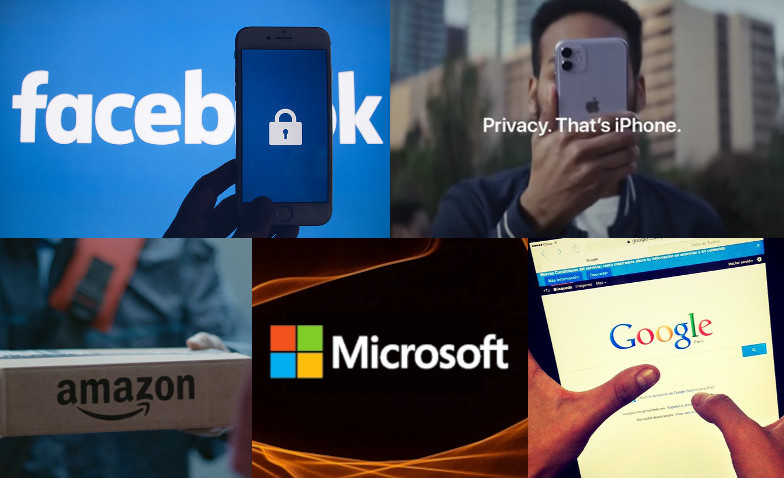
 There is little doubt that over the past 15 years, the rise of the US tech giants has fundamentally reshaped the advertising industry, propelling a handful of businesses to unassailable positions of market dominance.
Today, Alphabet (Google’s parent company), Meta (Facebook, Instagram, WhatsApp), and Amazon are on track to capture nearly 55% of global advertising spend outside of China in 2025, a share expected to rise further by 2030.

This concentration of power, particularly the long-standing Google and Meta “duopoly”, is the result of massive user bases, sophisticated data-driven targeting, and accessible self-service ad platforms, raising significant concerns for advertisers, publishers, and global authorities.
Google and Meta’s advertising supremacy is built on two different, yet highly effective, approaches to connecting brands with consumers.
Google dominates search, with over 90% of the UK search advertising market, capturing users who are actively searching for products or services, meanwhile, with billions of monthly active users across its platforms Meta excels at an outbound marketing approach, reaching people based on their interests and behaviours as they scroll through their feeds.
Both platforms tap into vast amounts of proprietary data and advanced AI algorithms to create highly detailed audience segments. This allows for unparalleled precision in ad delivery, ensuring messages resonate with the right people at the right moment. The ability to track user behaviour across a vast network of websites and apps, facilitated by tracking tags and cookies, provides valuable insights that traditional media owners lack.
Google Ads and Meta’s Ads Manager provide intuitive tools that allow businesses of all sizes to run and optimise their own ad campaigns efficiently. These platforms offer granular control over budgeting, ad formats, and audience selection, democratising access to powerful ad tools but simultaneously locking advertisers into their respective ecosystems.
But the dominance of the tech giants has had a profound impact across the digital ecosystem.
While the platforms offer effective reach and targeting, the lack of competition and high demand can lead to rising costs. Advertisers may also experience opacity in how ad prices are set and how their campaigns perform due to the platforms’ integrated and often self-preferencing systems.

For independent publishers, including news organisations, this domination has led to a drastic decline of their share of adspend, meaning they now compete for a fraction of the revenue captured by Google and Meta. Even so, publishers are forced to jump into bed with the tech giants due to the significant traffic they refer to their websites. This imbalance of bargaining power means publishers have little choice but to accept the platforms’ terms, including rules around ad formats and data collection, which can limit their own revenue potential and control over their data.
Naturally, this dominance has not gone unnoticed by the authorities, who are taking action to curb their power on both sides of the Atlantic. The UK’s Competition & Markets Authority (CMA) has also raised concerns that the firms’ dominance makes it virtually impossible for new competitors to emerge and pushes up prices for consumers.
Over in the States, the Department of Justice has filed major lawsuits against Google, specifically targeting its monopolistic control over the digital ad technology ecosystem. The DOJ argues that Google has “thwarted meaningful competition” through practices that unfairly prioritise its own services.
Meanwhile, the European Union’s Digital Markets Act and the UK’s proposed new rules are designed to foster competition by imposing a code of conduct and granting regulators powers to monitor algorithms and even break up dominant companies if necessary.
Shifts in privacy rules, such as Apple’s App Tracking Transparency and the eventual deprecation of third-party cookies on Google Chrome, are intended to give users more control over their data, which may reduce the effectiveness of some targeting methods and potentially push advertisers to diversify their strategies.
The outcomes of these ongoing legal and regulatory battles will shape the future of digital advertising, determining whether a handful of tech giants will continue to dominate or if the market will become more competitive and transparent for all participants.
However, there appears to be little appetite among the marketing and advertising community for change. They might bemoan the tech giants’ power but they still hand over the bulk of their budgets to them anyway, because that is where their rivals advertise. Was it ever thus?