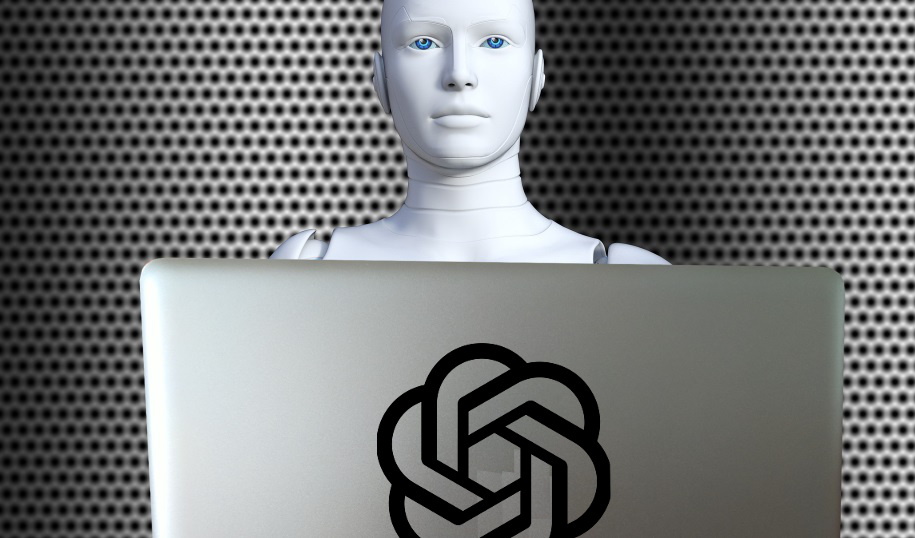
 There is little doubt that the rise of AI has been one of the major trends that has shaped the marketing and advertising industry over the past few years, but instead of us waxing lyrical about the technology, we have decided to pass the baton to AI.
And this, rather robotic text with no humour, little emotion and not a scrap of self-doubt, is what it came up with. It’s got all the facts in there, just not the most enjoyable read, unless, of course, you are a machine:

The use and influence of AI in marketing and advertising has grown exponentially since 2010, fundamentally reshaping the industry from manual processes and guesswork to a data-driven, hyper-personalised, and automated landscape. This evolution has been driven by the rise of big data and significant advancements in machine learning (ML), natural language processing (NLP), and computer vision, offering unprecedented opportunities for efficiency and engagement, alongside new ethical challenges.
The period from 2010 to the present can be segmented into distinct phases of AI adoption:
Early 2010s: Data analysis and initial automation
In the early part of the decade, AI applications were primarily focused on basic data analysis and automation of routine tasks. Marketers began using rudimentary AI in customer relationship management systems and email marketing for simple customer segmentation and A/B testing. The ability to process large datasets (big data) started to provide insights into consumer behavior, although this was often a slow and manual process. Programmatic advertising emerged during this time, using algorithms to automate the buying and selling of digital ad space in real-time, a significant step in AI-driven advertising.
Mid-to-late 2010s: Personalisation and ML integration
As machine learning algorithms became more sophisticated and data availability surged, the focus shifted toward delivering personalised experiences at scale. Recommendation engines became ubiquitous, famously used by ecommerce and streaming giants. Chatbots also emerged as a key application, providing instant customer support and data collection around the clock. Brands started using AI for predictive analytics, forecasting trends, and optimizing ad spend across channels automatically, moving beyond simple automation to more strategic decision-making support.
Present day (2020s-present): Generative AI and hyper-personalisation
The current era is defined by the breakout of generative AI, which has transformed content creation, ad design, and customer interaction. AI tools can now generate compelling ad copy, images, and video variations, dramatically increasing efficiency and creative output. Hyper-personalisation is the new standard, with AI tailoring not just product recommendations but entire ad experiences based on a vast array of real-time behavioural and emotional data. AI agents are emerging to manage complex workflows autonomously, further integrating AI into the core of marketing operations.
Brands leading the way
Numerous brands have successfully integrated AI into their marketing strategies:
Amazon: Utilises AI for its renowned personalised product recommendation engine, which is estimated to drive approximately 35% of its total sales. It also uses AI in supply chain automation and dynamic pricing.
Netflix: Leverages AI and machine learning to deliver highly personalised content suggestions, with over 80% of content watched on the platform driven by its recommendation system.
Coca-Cola: Used generative AI platforms in its “Create Real Magic” contest and subsequent holiday campaigns to create original, AI-driven artwork and commercials, engaging digital artists and fans in innovative ways.
Nike: Employs AI for predictive analytics regarding customer purchasing behaviour, demand forecasting, and its “Nike Fit” app which uses computer vision to recommend the perfect shoe size.

Heinz: Ran a successful campaign where AI image generators were prompted to “draw ketchup,” and the resulting visuals, which consistently resembled the iconic Heinz bottle, were used across social media and digital ads.
HubSpot & Salesforce: Leading marketing automation and CRM providers have deeply embedded AI into their platforms, offering features like AI writing assistants, sales email generators, and intelligent customer service bots to streamline marketing and sales processes.
The key advantages of AI include increased efficiency and automation, as AI handles time-consuming tasks like data processing and campaign management, allowing human marketers to focus on strategic and creative endeavours. AI also facilitates hyper-personalisation, enabling the delivery of highly relevant, tailored content to individual consumers, which boosts engagement and conversion rates.
Furthermore, it enhances targeting and optimisation, as machine learning algorithms analyse vast data sets to identify ideal audiences and maximise return on investment by optimising ad spend in real-time. Lastly, AI provides deeper consumer insights through sentiment and behavioral analysis, uncovering trends and preferences that might elude human analysis.
However, these advancements come with notable threats. The extensive use of consumer data raises significant data privacy and security concerns, requiring strict adherence to complex regulations like GDPR.
There is also the risk of algorithmic bias, where AI systems trained on skewed data may perpetuate discriminatory advertising practices, potentially damaging a brand’s reputation.
Another threat is the potential loss of the human touch and creativity; an over-reliance on AI might result in generic content and impersonal interactions, eroding the consumer trust that authentic human connection builds.
Finally, the automation provided by AI leads to concerns about job displacement and the creation of skill gaps within the workforce, necessitating continuous reskilling to adapt to the evolving technological landscape.
In conclusion, AI has transitioned from a niche technical tool to an indispensable component of modern marketing and advertising, transforming how brands connect with consumers today and into the future.
Related stories
Decision Marketing at 15: The ‘Big Bang’ for retail media
Decision Marketing at 15: Why data now rules the world
Decision Marketing at 15: Direct mail the great survivor
Decision Marketing at 15: How data sparked a revolution
Decision Marketing at 10: Who’s the poor relation now?