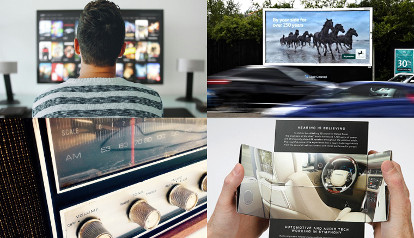
 The marketing industry is facing a “quality crisis” as brands over-invest in digital platforms while ignoring traditional channels that offer superior trust and creative impact.
That is the standout conclusion of a new report The Value of Super Touchpoint Planning, published by Jicmail and the DMA and based on nearly 2,000 campaigns in the DMA Effectiveness Databank.

The report, which challenges the current obsession with immediate return on investment (ROI), suggests that the pursuit of efficiency is actually hampering total profit.
While ROI often peaks with just two channels, the data reveals that overall effectiveness in customer acquisition continues to climb as marketers add more platforms, reaching its peak at ten channels or more.
Central to the findings is the emergence of “Super Touchpoints” – channels that excel in four key areas: trust, creativity, targeting, and measurement.
These high-performing channels, which include TV, radio, direct mail and out of home, outpace average effectiveness by 25%. However, the study warns that these strengths are being chronically under-used, with only 55% of current campaigns leveraging them.
The report notes:“There is a significant gap between where the money is going and where the impact is actually happening.”

While digital spend dominates the landscape, many online channels score lower on the “Super Touchpoint” index compared to traditional media. OOH advertising and radio, for instance, are identified as being significantly under-invested relative to their ability to build brand authority.
The research also highlights a distinct divide between finding new customers and keeping existing ones. While acquisition thrives on a “more is better” approach, retention effectiveness peaks at six channels. For existing customers, “owned” media – such as apps, email, and direct mail – proves far more powerful than expensive paid media.
Synergy is the other “secret sauce” identified by researchers. Combining TV with door drops can boost effectiveness by 45%, while pairing TV with direct mail sees a 25% uplift. The study argues that the sequencing and “synchronisation” of these channels are just as vital as the creative itself.
Measurement also remains a primary driver of success. Brands using advanced techniques like marketing mix modelling (MMM) and brand tracking saw a massive jump in business effects. When paired with high creative scores, these strategic insights led to a 44% increase in commercial impact.
As the industry looks toward an AI-driven future for media planning, the report urges marketers to stop counting the pennies on ROI and start looking at the bigger picture of multi-channel scale and the “trust premium” of traditional media.
Related stories
Youth revolt: ‘We’re no longer slaves to the algorithm’
Consumers demand return to print as digital fears soar
Let’s get physical: Brits reject mobile for printed offers
Pro-print and paper campaign claims more big scalps
Digital down as traditional channels return to the mix
Spooner on…pushing the envelope of effective marketing