
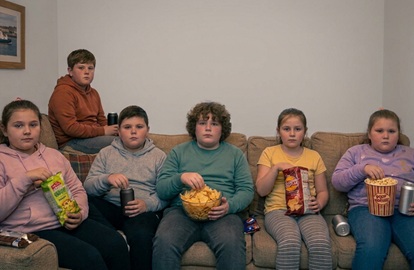
 The marketing industry is facing yet another crackdown on food and drink advertising with the Health & Social Care Committee urging the Prime Minister to make it his “clear, personal mission” to tackle England’s obesity crisis, with a call to “rip it up and start again” on current legislation.
In a third and final report of their “food and weight management” inquiry, MPs say they have “no faith” that the Government will achieve its aim – stated in the 2025 10 Year Health Plan – to “launch a moonshot to end the obesity epidemic”.

The cross-party committee says the Government needs to clearly define what it means by “ending the obesity epidemic” and set a target and milestones towards reducing rates across the country.
The report has sweeping implications for the advertising and marketing industry. Health campaign groups argue that the statutory UK-wide rules introduced in January 2026 – which banned pre-9pm TV ads and paid online ads for high fat, sugar, and salt (HFSS) products – were “gutted” due to intense food industry lobbying.
If Prime Minister Andy Burnham acts on the committee’s urgent demands to close existing loopholes, the advertising sector faces a massive squeeze across multiple channels.
Under the current January 2026 regulations, food companies are granted a brand exemption. This means that while a fast-food chain cannot advertise a specific burger before 9pm, they can still run an ad showcasing their corporate logo, brand colours, or general brand name.
The committee wants this exemption completely removed. Agencies would no longer be able to use brand-only ads to maintain awareness. If a brand’s overall range is predominantly “less healthy”, their entire brand identity could be barred from pre-watershed TV and digital platforms.
The advertising industry currently builds campaigns around a legacy Nutrient Profiling Model (NPM) to determine which foods are legally restricted. The committee is demanding the immediate enforcement of the tougher 2018 Nutrient Profiling Model by the end of 2027. This model heavily penalises “free sugars” (added sugars).
Overnight, a wide array of everyday items previously cleared for daytime advertising –such as certain yoghurts, breakfast bars, juices, and mueslis – would be reclassified as restricted HFSS products.
The January measures do not cover out-of-home media, a move which led to an immediate shift in adspend toward OOH. However, the committee is now pushing for a national ban on outdoor “junk food” advertising. This would devastatingly impact OOH media owners. Regional mayors – including Burnham when he was power in Greater Manchester – have already pledged to ban these ads across local transport systems, but a national mandate would effectively wipe HFSS brands off British streets entirely.

The report also explicitly calls for extending advertising regulations to cover sports sponsorships, social media influencers, and online gaming environments. Marketing agencies would have to dismantle high-value sports sponsorships – football shirt sponsors, stadium branding – and restrict complex gamified marketing or influencer partnerships aimed at younger demographics.
Finally, the report also reiterates is demand that the Government excludes any businesses that derive a significant portion of their sales from less healthy products from participating in future policy development, as well as their trade bodies. This would sever the direct lobbying line that ad networks and food giants have traditionally used to tackle incoming restrictions.
The report recommends that Andy Burnham should oversee this work by chairing a new Cabinet committee to drive delivery of measures.
The Department of Health & Social Care (DHSC), citing research by Frontier Economics, said obesity costs the UK economy £74.3bn a year, including £11.4bn to the NHS, £8.9bn to business, £500m to social care, and costs from reduced quality of life of £48.1bn.
Health & Social Care Committee chair Layla Moran MP said: “The Government last year declared its bold ambition to end the obesity epidemic, but it lacks a cohesive, coherent plan. An ambition without a plan risks sounding either naïve at best, or insincere at worst, and is bound to fail.
“The moonshot to end the epidemic must be tough on the causes of obesity as well as providing treatment. The Government’s plan must tackle problems upstream and downstream. That’s why improving the care pathways and access to treatment must be twinned with determination to change the food environment.
“That will mean standing up to the food industry on numerous points – regulating the constant presence of adverts and promotions for unhealthy food and drink that wallpaper our lives, simpler labelling on products, targets for supermarkets to sell more healthy foods and restricting fast food outside schools.
“This issue transcends Government departments, and experience tells us that if the Prime Minister isn’t calling the shots on such a huge, societal issue, the loose ends won’t join up and the moonshot will crash land. We urge him to take up this ambition and be the driver of change. In turn, the NHS, public health and the economy will reap the long-term benefits.”
Related stories
New HFSS crackdown ‘could wipe out £1bn in adspend’
Industry chokes as MPs demand fresh HFSS crackdown
Burnham faces health lobby fury over ad ban ‘failings’
Industry fumes as Govt plans to beef up LHF crackdown
‘99% of adspend unaffected by new fatty restrictions’
Industry unites to push ad restrictions that fight the flab

Be the first to comment on "Rip it up and start again: MPs demand new HFSS law"