
 With 2014 over and out, there will be many – most notably Tesco – who will be glad to see the back of it. For the retailer “annus horribilis” doesn’t even scratch the surface, but for others – Warren Moore and Simon Hall in particular – the year marked a return to the good old days. Here we provide a month by month guide to the top stories of the year…what did you miss?
JANUARY
The year kicked off with a riot – quite literally – at HMP Oakwood, home to the UK’s first “prison call centre”. Although it was not known whether any of the 40 inmates involved manned the phones, the disturbance raised eyebrows over the effect it would have on brands which use the service.
In what was the first of many rebrands in the agency market CMW, the business set up by Jonathan Clark, Janet McKay and Steve Walpole in the Nineties, ditched its name and rebranded as Stack, in a move designed to reflect its wider marketing proposition.
Meanwhile Agency Republic, the one-time digital darling of Omnicom’s UK DAS network and Campaign magazine, was scrapped and merged with sister agency Critical Mass, although its senior management team came out on top.
Justin Basini, the former Capital One marketing chief who set up his own data company Allow, emerged as marketing director of mobile payments company Zapp.
And Havas EHS signed a major big data agreement to offer its clients the ability to proactively listen to what customers are saying across social media and other digital channels and engage with them in real-time. The agency selected Provenir, which specialises in big data cloud-based solutions, following a successful pilot.
In the world of new business, Proximity scooped the SSE direct account; Virgin handed a brief to Wunderman, Partners and Fuel got a boost from DWP and AIS picked up the National Express account.
FEBRUARY
 BSkyB’s £50m CRM operation found itself being investigated by the Information Commissioner’s Office after being placed on its “watch list” because of concerns about compliance at the company’s contact centres. The company first launched the CRM strategy in 2000, and it has been the main driver of its sales and marketing operation ever since, with thousands of staff promoting Sky services.
Meanwhile, Information Arts, one of the best known brands in the UK B2B data industry, was dropped, with the company rebranded Harte-Hanks to bring it in line with its parent company. Originally launched in 1999 by Simon Lawrence and Gary Selby, the company expanded out of the UK, and now operates in Europe and the US for clients including Shell, Cisco, Vodafone and Xerox.
And Lateral Group, the DST Systems-owned data business which has expanded to offer creative and planning services, was rebranded the Global Insight Group, dubbed “the GIG at DST”. The enterprise-wide division has offices in both the UK and US, and is designed to offer existing as well as new DST clients greater data insights.
The door-drop industry hit back at claims that it was to blame for the failure of the NHS England care.data awareness campaign, with some questioning the recall research and others slamming the creative merits of the leaflet. The contract for the leaflet – rather ironically headlined “Better information means better care” – was awarded to The Leaflet Company and delivered by Royal Mail over a three-week period between January and February.
In new business, Acxiom picked up the eBay big data account; Moneysupermarket hired Proximity; Pru handed account to Perfect Storm; Soul landed Yorkshire Building Society; and English Heritage hired Bray Leino.

MARCH
 Paddy Power was forced to rip down its Oscar Pistorious ad – offering refunds if the sprinter walked free – following a public outcry which saw more than 5,200 complaints to the ad watchdog and 125,000 signatures on an online petition.
In what was one of the biggest agency stories of the year, March also saw Simon Hall and Warren Moore land on their feet once more after picking up a major chunk of British Airways business by setting up a joint venture with Bartle Bogle Hegarty to run the airline’s loyalty programme.
Howard Draft, one of the DM industry’s most colourful characters, became the next man to lose his name above the door after Interpublic Group dropped the Draft brand and relaunched its DraftFCB network as FCB. The UK business, however, is now known as FCB Inferno.
There was bad news for the UK direct marketing industry after MEPs voted by an overwhelming majority to pass the less business-friendly version of the EU Data Protection Regulation. The move, seen as a major body blow to the DMA-led fight against tougher regulation, was described as the “Doomsday scenario for DM”.
Meanwhile, Billington Cartmell was also relaunched and rebranded HeyHuman as part of non-executive chairman Rupert Howell’s strategy to move it away from its sales promotion roots.
In new business, Dreams brief went to Perfect Storm; Majestic hired Indicia for its CRM account; Sainsbury’s appointed The Marketing Store; and Amaze scooped the Carlson Rezidor digital business.
APRIL
 Maidenhead found itself crowned the “hanky panky capital of the UK” after a data analysis uncovered that the Berkshire town has the highest proportion of people per population who are after a bit on the side. Illicit Encounters, a dating website specialising in extra-marital affairs, revealed the findings of a data crunch of its membership, based on 140 UK towns and cities with a population above 50,000.
Things went from bad to worse for NHS England after a Freedom of Information request revealed the final bill for its bungled marketing campaign to raise awareness of the care.data programme came in at just over £1.3m, with a litany of suppliers, caterers and even travel firms getting in on the act.
Over in the world of telemarketing, the battle against nuisance calls gathered pace with Reactiv Media, a company which uses the strapline “direct marketing with a difference”, being expelled from the DMA. Set up in June 2007 by Tony Abbott with just 12 staff, the company now employs 250 people at its HQ and call centre in Elland, West Yorkshire. But hundreds of complaints about an unrelenting campaign of PPI nuisance calls saw the firm cross swords with the authorities.
Watson Phillips Norman, the agency best known for its DRTV, press and direct mail campaigns, boosted its digital capabilities by merging with Chameleon to form WPN Chameleon. Set up in 2001 by WWAV (now Rapp) co-founder John Watson and creative chief Maria Phillips, the agency works across a range of commercial and fundraising clients. Chameleon was launched three years earlier, in 1998, by Vicky Reeves and has a similar mix of clients.
Business secretary Vince Cable remained defiant despite the deepening scandal of Royal Mail’s privatisation, after being accused by some MPs of flogging off the postal operator for an “utterly ridiculous” price. Under intense grilling from MPs on the Business Select Committee, Cable insisted there would be “absolutely no apology” from the Government over the sale, repeatedly claiming that the 330p a share was the best for Royal Mail shares at the time.
On the new business front, Wiggle rode into Perfect Storm; Alzheimer’s Society appointed Lida; Proximity scooped Halifax business; OgilvyOne won Regus; M&C Milk picked up the global BA data work; and FCB netted National Savings.
MAY
 The month started with VCCP me managing partner Ben Stephens following his fellow co-founders, Chris Whitson and Neil Francis, out of the door nine years after the agency was launched as Stephens Francis Whitson. The parent company handed Stephens’ responsibilities to VCCP chief strategy officer Sophie Maunder-Allan, who became chief executive of the DM agency.
Direct and digital agency bosses heaved a collective sigh of relief following the collapse of the proposed $35.1bn (£22.8bn) merger between Omnicom and Publicis, easing fears of huge job cuts and agency closures. One Omnicom DM agency boss told DecisionMarketing: “To be honest, I’m pretty relieved. It would have been a nightmare. Those $500m (£325m) of savings would’ve had to have come from somewhere. Many well-established DM agencies could have been under threat of merger and closure, not to mention the huge pressure on headcounts.”
Meanwhile, the highest court in the EU created a major headache for Google – and content providers around the world – by ruling consumers already had the “right to be forgotten”. And it not only got Google chiefs reaching for the extra-strength painkillers; it opened a can of worms on the entire communications industry, according to one expert.
Communisis Data Intelligence chief Jon Cano-Lopez quit the company to join The Data Agency – formerly The REaD Group – as chief executive. The role was previously held by founder Mark Roy, who became chairman and Cano-Lopez is now working side-by-side with Roy to drive the business forward.
A senior Omnicom source rubbished reports that TBCH had been merged into sister agency Rapp, following the loss of its biggest account – mobile giant Three – claiming the brand was safe, for the time being at least. Speaking exclusively to DecisionMarketing, one Omnicom chief said: “They couldn’t have got it more wrong if they’d tried. The simple fact is that there’s no merger.”
And in new business, VCCP me picked up the Kia Motors account; Medialab scooped the Post Office; and TMW snared McCain’s digital business.
JUNE
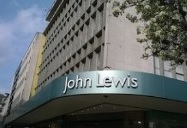 Thousands of companies now face being dragged through the courts after John Lewis was ordered to pay damages for sending spam emails to a man, who successfully argued he had not opted in to receive marketing emails. Roddy Mansfield took the company to court when he started receiving emails after registering his details with John Lewis’ website, which opted him in for marketing using a pre-ticked consent box. At a County Court hearing, a judge ruled the company had acted unlawfully as it could not prove Mansfield had agreed to receive the emails or was in fact one of their customers.
Rapp swooped to buy independent promotional and shopper marketing agency Haygarth, in a deal which sees the two companies work side by side within Omnicom’s Diversified Agency Services (DAS) division. Set up in 1985, Wimbledon-based Haygarth and its 100-plus staff continues to operate as a separate brand and retain its own identity.
Heather Westgate, one of the direct marketing industry’s most passionate advocates, shut up shop at TDA, bringing the curtain down on the Cheltenham agency she founded more than 18 years ago. The business had originally been set up as The Direct Agency in 1996.
Communisis raided its acquisition war-chest once more to purchase The Communications Agency – set up by Robert Prevezer in the late Eighties – for £7.25m. It was later to be rebranded.
Meanwhile M&C Saatchi-owned direct agency Lida revealed plans to expand globally, opening its first oversees office in Australia followed at a later date with an operation in Sweden. Lida Sydney is spearheaded by M&C Saatchi Sydney’s managing partner, Christine Gardner, whose industry experience has been mainly in CRM, including managing director roles with established agencies including Ogilvy and Wunderman Australia.
The REaD Group and Data Agency chairman Mark Roy thumbed his contacts book once more to appoint EuroDirect founder and former Callcredit chief Mike Green to spearhead new business development. As chief market strategist, Green advises the board on potential opportunities to boost the company’s portfolio, led by The Data Agency, including possible expansion into new areas.
There was bad news for the England football team even before they had kicked a ball at the World Cup in Brazil, after a predictive analysis of fixtures carried out by MetaMetrics worked out – successfully as it happened – the team would be on the first plane home.
And in new business, the Post Office revealed £10m data line-up of Rapp, CACI and Aimia; Rapp collared a new Guide Dogs task; MBA netted Odeon Première Club; and Lida landed John Lewis financial services.
JULY
 Early summer saw BT bosses left with egg on their faces after a Nottinghamshire woman opened up a direct mailing only to find it was addressed “Dear Mr Melon Porkface”. Tales of such bungling are of course legendary; none more so than the BA loyalty club member who received a missive addressed to Dear Rich Bastard in the Nineties. However, Lynn Dixon – from Ashford, who is not even a BT customer – managed to see the funny side of being on the wrong end of the latest blunder.
As the World Cup drew to a close, it was revealed that one of the most audacious guerilla marketing stunts ever planned had been thwarted after Paddy Power’s plan to get Luis Suarez to wear a branded mouth-guard was kicked in the teeth when Fifa banned the striker for another gnash attack.
Meanwhile, Germany hailed the influence of big data on its World Cup triumph, after the German Football Association (DBF) said its Match Insights platform – developed with software giant SAP – had given the team the edge.
But over at Tesco things went from bad to worse and boss Philip Clarke finally paid the price for his failed turnaround plan. He was ousted and replaced by top Unilever man Dave Lewis – the first time Tesco had appointed an outsider to the role. The move came as the retailer announced its second profit warning in two years, but there was more bad news to come.
In agency land, Engine Group, home to Partners Andrews Aldridge and Fuel, laid out plans to expand its services across business intelligence and data, creative services and digital content following a £100m buyout by US venture capitalist group Lake Capital. The move resulted in private equity owner HIG – which invested £62.5m in the business in 2010 to fund Engine’s expansion into the US and China – being bought out.
Engine also triumphed on the new business front, picking up E.On’s digital brief; while Rapp picked up both Hastings Direct and US life and accident insurance company Cigna.

AUGUST
 Capital One followed BT’s mailing blunder with an even worse crime after it sent a direct mailpack promoting its Classic Card – designed to repair people’s credit rating – to a man who had died in 2003. The letter, addressed to Frederick Wildgust in Arnold, Notts, was opened by the deceased man’s son, who lives at his parent’s home.
August also saw the Vatman loom large after the DMA warned companies which supply direct mail to charities and financial services over bulk mail practices. Known as “single sourcing”, the industry body claimed companies could find themselves with a large backdated tax bill as well as being liable to pay penalties. One UK charity faced a £700,000 retrospective VAT bill.
But it wasn’t all doom and gloom for direct mail after a study showed consumers see mailings as over ten times more engaging than advertising on a mobile phone. While marketers the length and breadth of the country plough millions of pounds into smartphone campaigns, the City Numbers research shows direct mail is second only to TV ads in the popularity stakes.
Finally, following Germany’s World Cup success, Bundesliga team FC Bayern Munich revealed it wanted to replicate the national side’s use of big data by striking a deal with SAP to boost its global fanbase and optimise the team’s performance.
In new business, EE switched its B2B task to McCann; DFS handed its account to Karmarama; while M&C netted £30m Konami launch and Rapp triumphed again, this time picking up the consoildated ScottishPower DM business.
SEPTEMBER
 The list broking market received a dire warning in late summer after a report claimed the already under pressure industry will be left decimated if the EU data protection reforms create an opt-in only regime. Any move to bring in an opt-in only regime would render obsolete millions of database marketing records, according to Medialab.
Over at Tesco, the marketing team were limbering up try to get on-side with their new fitness fanatic boss, Dave Lewis, after he admitted that there will be management changes, because “there has to be”. The obsession with fitness at a top level within Tesco is legendary, although quite how former boss Philip Clarke – who was hardly a work-out addict – fitted in is not known. Lewis’ reported running obsession began when he agreed to take part in the (Unilever-sponsored) Flora London marathon.
But the retailer soon ran into even more trouble after it was forced to suspend senior executives, including UK managing director Chris Bush, following news that it had overstated its half-year profit guidance by up to £250m.
Things were looking brighter for Simon Hall and Warren Moore, however, who put the old band back together to head the management team for British Airways’ direct marketing account, being run through a joint venture with BBH. The agency embarked on a major recruitment drive after picking up the task in March, hiring 50 staff over the summer. Five of the seven-strong senior team have worked with Hall and Moore at either CHI or Proximity London – or both.
Meanwhile TNT Post UK, the second largest private postal service in the country and Royal Mail’s chief rival, became the latest firm to rebrand, as Whistl, following its separation from TNT Group.
In Brussels, little known Czech politician Vera Jourová was revealed as the successor to Viviene Reding, charged with ensuring the safe passage of the new data protection reforms.
In other data news, Acxiom signed a strategic partnership with data specialists The Data Agency to be the sole reseller of a suite of Acxiom data products for rental to the UK market.
And Omnicom secured a global deal with Salesforce to build a huge CRM platform, enabling agencies in the group – such as Rapp, Proximity, DDB and TBWA – to offer clients the ability to track every customer interaction for the group’s most prized clients, including Unilever, Pepsico, Apple and Intel.
Meanwhile in new business, Pernod Ricard handed its brief to AIS London; EMO took over the McCarthy & Stone account; and Proximity started work on the Economist.
OCTOBER
 The queen of the UK’s data industry, Edwina Dunn, called for a cultural shift in society to tackle the stigma associated with studying “spoddy” subjects, like science, engineering and maths, if the country is to fully exploit the rise of big data. Citing government predictions that by 2017 the big data industry will have boosted the UK economy by £216bn and created 58,000 new jobs, Dunn warned that there is still a long road ahead.
Tesco’s financial woes put paid to its free online video streaming service, Clubcard TV, which had only been running 18 months. Launched to Tesco’s 16 million loyalty scheme members, the welcome email had stated: “This is just the start for Clubcard TV. We’ll be regularly updating the movies and TV shows that we bring you, as well as introducing new features and ways to watch.”
Meanwhile, a major private equity firm was reportedly ready to make a swoop on Tesco-owned data analysis giant DunnHumby after already having one bid rejected. The data company, valued at £2bn, has run the Clubcard programme for over 20 years but also works with 400 of the largest retailers and brand-owners across the world, including Procter & Gamble, Coca-Cola, Diageo, GlaxoSmithKline and Mondelez International. Clubcard chief architect Sir Terry Leahy soon emerged as a potential matchmaker following reports that one of the firms he advises – buyout specialist Clayton Dubilier & Rice – is eyeing up the data giant.
Tesco’s marketing strategy was also called into question by DunnHumby co-founder Clive Humby, who launched a scathing attack, claiming the supermarket giant’s obsession with instore promotions was making the Clubcard scheme virtually irrelevant.
Not that Tesco was the only one under fire; loyalty industry specialists raised concerns over whether Morrisons’ rewards scheme – Match & More – was little more than a gimmick.
Over in adland, where data is often viewed with disdain, Sir John Hegarty reinforced old stereotypes by claiming data has never created wealth, adding “data creates nothing; but creativity has all the time”.
Back in the real world, October also saw the promise of new legislation to combat nuisance calls and texts, which the Government claimed should be in place before the general election – six months later than originally planned – as new evidence emerged that the problem is far worse than previously reported.
On the new business trail, Iris landed Club Wembley; Kitcatt Nohr took on Macmillan; Mitsubishi handed a data brief to Occam; WDMP scooped the baby club account ‘Happy Tummy Club’ and the GIG at DST proved its mettle by picking up Hyundai.
NOVEMBER
 November saw Publicis Groupe boost its digital credentials with a $3.7bn (£2.3bn) cash deal for Sapient Corp – owner of SapientNitro – six months after its proposed merger with Omnicom collapsed. According to a report by Bloomberg, Publicis is to shift the majority of its digital activities to the new agency – Publicis.Sapient – with the likes of DigitasLBI, Razorfish and Rosetta likely to be folded in. The future of the brands is less certain.
REaD Group ratcheted up its assault on the data market by launching a dedicated analytics and consultancy arm – REaD Group Insight – and hired former St Ives chief Scott Logie to run it. However, sister division The Data Agency parted with managing director of data Dee Toomey, who left the business to pursue what the company described as “other opportunities”.
Meanwhile former DST Output boss Nick Dixon, the man who is said to have struck more deals than the Wolf of Wall Street, marked his return to the direct marketing industry by launching a new acquisition-focused venture, Veriteva.
And, the month wouldn’t be complete without a Tesco story, which came in the form of Grant Harrison, the former Tesco chief who played a major role in launching Clubcard and appointed DunnHumby to run it. He urged new boss Dave Lewis to bite the bullet and ditch both. Back in 1993, Harrison led the team which investigated the potential of loyalty cards – after being briefed by then marketing director Sir Terry Leahy – researching programmes across the world and coming up with the proposal.
Over in the world of new business JustGiving hired Rapp to run its CRM; while Oxfam appointed Lida; White Company hired Rapp Media; Geometry Global started work for the British Legion; and Occam scooped Northern Rail CRM.
DECEMBER
 The month started with two top level departures. Firstly Global Insight Group UK boss Jason Cromack left the DST Systems division, fuelling an operational overhaul which saw the company fall back under the control of the print side of the business, DST Output.
Then Tesco chief creative officer Matt Atkinson, the former boss of Havas EHS, became the latest casualty of new boss Dave Lewis’ shake-up of senior management roles and left the company. Atkinson had joined the retailer in June 2011 as group marketing and digital officer and was promoted to chief marketing officer 18 months later but found himself surplus to requirements.
At the DMA Awards, Leo Burnett Change scooped the grand prix for its Business in the Community campaign, Second Chance, which dominated the evening, picking up eight golds, four silvers and four bronzes.
The industry body also had good news for companies fearing the VAT timebomb, following an agreement in principle brokered with HMRC. Firms currently using so-called ‘single sourcing’ for mitigating VAT liabilities on direct mail print and distribution costs will not be subject to backdated fines – potentially running into the hundreds of millions of pounds.
Over in the world of big data, WPP signed an £800m deal with IBM to transform the group’s global technology platform and launch new digital services to help its clients get closer to their customers. As part of the seven-year agreement, IBM will provide a service delivery and technology platform that allows WPP to integrate its data and technology operations, while boosting productivity.
Data news of a rather more sinister kind hit Sony, after it was revealed a breach at Sony Pictures Entertainment may turn out to be far more damaging than the 2011 PlayStation Network attack. Five new films, details of business contracts, and the personal data of thousands of employees – and top movie stars – were leaked online.
December also saw Communisis confirm its acquisition of Geronimo – as first reported by DecisionMarketing in October. However, before the ink had even dried on the deal the former print giant had scrapped the name, along with The Communications Agency, to rebrand its acquisitions as the Psona Group.
The year ended with Lord Alan Sugar scenting the sweet smell of success in the £4bn SEO market after handing BBC Apprentice finalist Mark Wright the £250,000 prize to launch a joint venture digital marketing agency. Australian Wright defeated rival Bianca Miller, whose business idea was to sell a range of tights to match varying skin tones, and will now have the guiding hand – and business nous – of Lord Sugar to steer him through the agency market.
In what was to prove a quiet month for new business, Perfect Storm scooped a global account from Britvic; while SapientNitro landed the digital account from car brand Kia.

2014 review: discover the winners and losers in our month by month round-up http://t.co/K2RmPUsNwJ #directmarketing #digitalmarketing #CRM